Press

Further notifications


Here you find further notifications about Fraunhofer ITMP based on links to external websites.

Press releases and further notifications before 2021

These refer to the TMP branch of Fraunhofer IME, which was transferred to the independent Fraunhofer Institute for Translational Medicine and Pharmacology ITMP in January 2021. 

Cancel
  • Dr. Shara Safarian took up a visiting professorship at the Institute of Translational Medicine at the First Hospital of Jilin University in China in October. The appointment is part of a scientific exchange agreement and is intended to further intensify international cooperation. At the same time, it strengthens the strategic positioning of the Fraunhofer ITMP on the Chinese research market.

    more info
  • The official dedication of the new building on the Niederrad campus marks a fresh milestone in the research landscape of the state of Hesse, set by the Fraunhofer Institute for Translational Medicine and Pharmacology ITMP. Some 200 prominent representatives from government, the science and research sector, industry and the trades involved in the building project gathered for the opening celebration at the invitation of Gerd Geisslinger, executive director of Fraunhofer ITMP. The new research building will serve as a locus of expertise in translational medicine while strengthening Hesse as a hub of pharmaceutical and biotech activity.

    more info
  • Researchers at Fraunhofer ITMP have identified a promising approach for children affected by KCNQ2-related epilepsy. A drug originally developed as an antipsychotic has shown the ability to activate KCNQ2 potassium channels and significantly reduce seizure-like activity. The findings, based on patient-derived brain cells and animal models, suggest the potential of repurposing this compound into much‑needed therapy, opening up new hope for affected families.

    more info
  • © Fraunhofer ITMP | Dr. Mira Grättinger

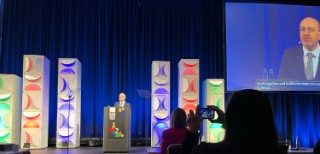
    The SLAS Europe Conference and Exhibition, one of the most important events in the field of laboratory automation and screening, took place in Hamburg for the first time from May 20 to 22, 2025 – with great success. The Fraunhofer Institute for Translational Medicine and Pharmacology ITMP was represented with a varied program and set technical highlights.

    more info
  • © Synthia consortium

    The SYNTHIA project, a groundbreaking public-private partnership funded by the Innovative Health Initiative (IHI), is set to revolutionize the field of personalized medicine by harnessing the power of synthetic data. As the first IHI project to tackle the critical need for privacy-preserving data solutions in healthcare, SYNTHIA aims to propel research and innovation to new heights, ensuring that patients receive the best possible care while safeguarding their personal information.

    more info
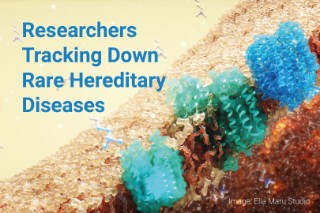
  • © Artwork Ella Maru Studio

    It is known that malfunctions of the proteins FLVCR1 and FLVCR2 lead to rare hereditary diseases in humans that cause motor, sensory and neurological disorders. However, the biochemical mechanisms behind this and the physiological functions of the FLVCR proteins have been unclear to date. An interdisciplinary team of researchers from Frankfurt am Main, Singapore and the USA has now deciphered the FLVCR proteins’ 3D structures and their cellular functions. The researchers have shown that the proteins transport the cellular building blocks choline and ethanolamine. Their findings contribute significantly to understanding the pathogenesis of rare diseases and developing new therapies.

    more info
  • The newly formed IDERHA consortium, consisting of academia, industry, health authorities, clinicians, and patient representatives, addresses the obstacles in accessing, integrating and analysing health data to maximize their value for patient care and research. Focusing on lung cancer, IDERHA wants to use complex digital health data to improve patient health outcomes by enabling more personalized care.

    more info
  • Effective therapy for genetic disease

    Press Release / February 11, 2023

    Hereditary angioedema (HAE) is a disease resulting in swelling of one or more parts of the body in the absence of a specific trigger. If the condition occurs in the upper respiratory tract, a so-called HAE attack ensues which can be life threatening. To date, the therapies to treat HAE are in form of injections and infusions. In a Phase 2 study involving the Universitätsklinikum Frankfurt, Charité – Universitätsmedizin Berlin and the Fraunhofer ITMP, it has now been shown for the first time that an orally administered drug can also treat HAE. This therapy has the potential to overcome the issues relating the complicated route of administration for injections as well reduced cost.

    more info